About Steelco Power
Integrated engineering and clean energy specialists transforming India's renewable infrastructure through innovation, precision, and sustainable engineering.
Complete Solution Provider
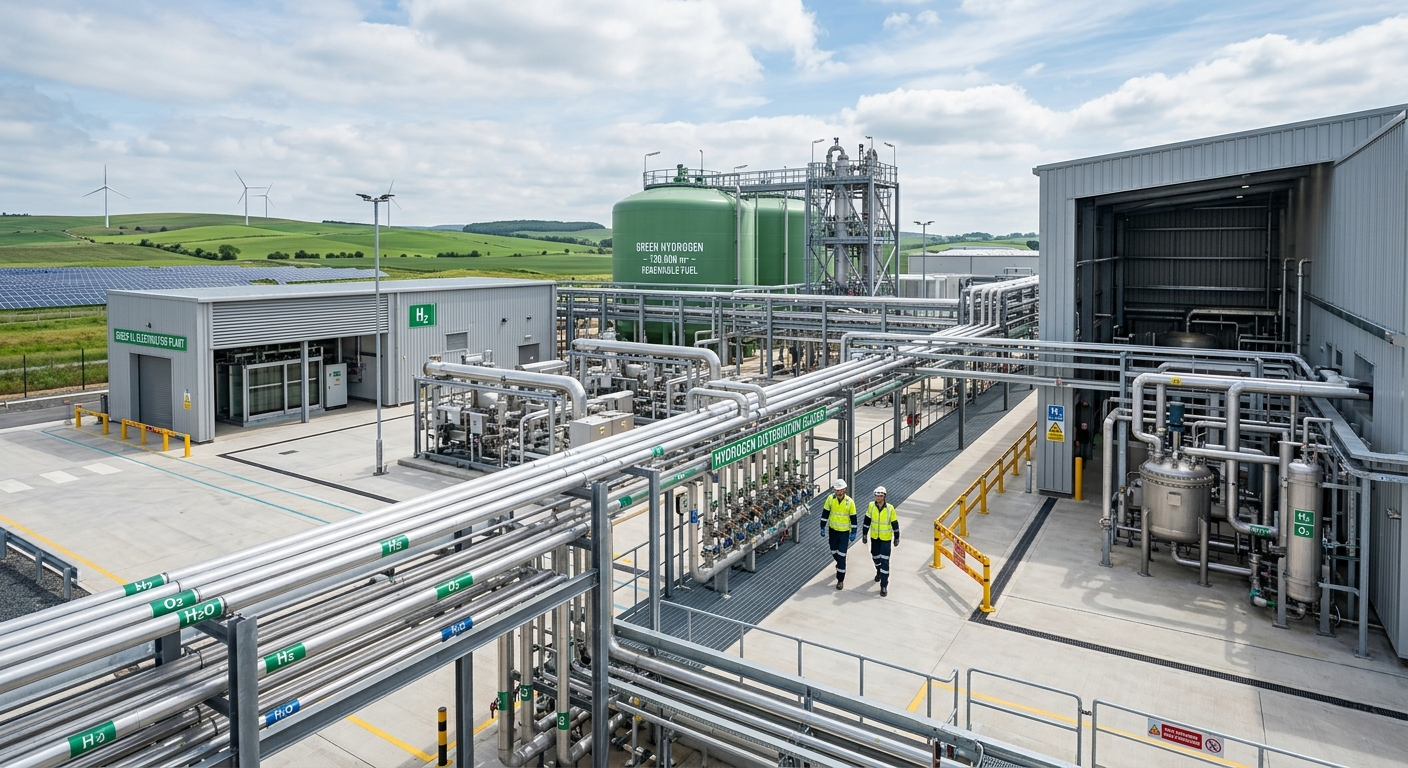
Steelco Power Private Limited is an integrated engineering and clean energy company specializing in wind power and green hydrogen production. We operate as a complete solution provider — from concept to commissioning — delivering high-performance, reliable, and scalable energy systems.
With strong expertise across mechanical, electrical, civil, RCC construction, and advanced instrumentation, we ensure precision-driven execution for every project. Our focus is aligned with global standards to deliver radical innovation in clean energy.
Our mission is to transform renewable energy infrastructure through innovative engineering and sustainable solutions aligned with IEC, ISO, and India's National Green Hydrogen Mission (MNRE).
Our Mission
To deliver innovative, efficient, and sustainable energy systems through engineering excellence — powering India's clean energy transition.
Our Vision
To become a leading global provider of advanced clean energy solutions — setting new benchmarks in wind and hydrogen engineering.
Our Capabilities
Engineering Expertise
Deep domain knowledge across all disciplines required to design, build, and operate world-class clean energy systems.
Core Pillars
Engineering Excellence
Precision Execution
Mechanical, electrical, civil, RCC construction, and advanced instrumentation expertise ensure every project meets exact specifications and international performance benchmarks.
Global Standards
Strict adherence to IEC 61400 wind standards, ISO quality management, and Indian regulatory guidelines — MNRE, CEA — for safety, reliability, and legal compliance.
Sustainable Future
Focused on transforming India's energy infrastructure through innovative engineering solutions that support the National Green Hydrogen Mission's 5 MMT target by 2030.
Industry Alignment & Standards
Steelco Power's technology, processes, and engineering are aligned with globally recognised standards and India's national clean energy policy frameworks.
International Standard for Wind Turbine Design & Safety
Quality Management & Environmental Management Standards
India's Ministry of New & Renewable Energy Regulations
Aligned with India's 5 MMT green hydrogen target by 2030
Ready to Collaborate?
Whether you are an investor, engineering partner, or industrial client — we welcome collaboration to scale India's clean energy future.
Common Questions
Frequently Asked Questions
What is CUF (Capacity Utilization Factor)?
CUF (Capacity Utilization Factor) is the percentage of actual energy generated by a plant compared to the maximum energy it could generate if it operated at full rated capacity continuously over a given period. “It is an important performance indicator used to evaluate the practical energy output and efficiency of renewable energy systems such as solar, wind, and green hydrogen-linked power infrastructure”
What is EPC?
EPC stands for Engineering, Procurement & Construction. It is a project delivery model in which a single company is responsible for the complete execution of the project — including system design, technical engineering, equipment procurement, construction, installation, testing, and commissioning — until the project is ready for operation.
What is a Turnkey Project / Turnkey Delivery?
A Turnkey Project is a complete project delivery solution in which the entire plant or system is designed, developed, installed, tested, and handed over in ready-to-operate condition. “It means the client receives a fully functional project with minimal coordination burden, allowing immediate use after final handover”.
What is Decarbonization?
Decarbonization is the process of reducing or eliminating greenhouse gas emissions, particularly carbon dioxide (CO₂), from energy, industrial, and transportation systems to mitigate climate change.
What is Green Hydrogen?
Green Hydrogen is hydrogen produced using electricity generated from renewable energy sources such as solar, wind, or other non-fossil power systems. It is considered a clean energy carrier because its production can be designed with minimal or zero direct carbon emissions.
What is Green Energy?
Green Energy refers to energy generated from environmentally sustainable and low-emission sources such as solar, wind, hydro, and other renewable technologies. It is used to reduce dependence on fossil fuels and support long-term clean energy transition.
What is Clean Energy?
Clean Energy is energy produced with significantly lower environmental impact and reduced emissions compared to conventional fossil-fuel-based energy systems. It includes renewable energy technologies as well as other low-emission energy solutions.
What is a Carbon Credit?
A Carbon Credit is a tradable environmental unit that represents the reduction, removal, or avoidance of one metric ton of carbon dioxide (CO₂) or its equivalent greenhouse gas emissions. Carbon credits are commonly used to support sustainability goals, carbon reduction strategies, and climate-related compliance or voluntary programs.
What is BESS (Battery Energy Storage System)?
BESS (Battery Energy Storage System) is a technology used to store electrical energy for later use. It helps improve energy reliability, load balancing, renewable integration, backup power availability, and grid stability.
What is Captive Power?
Captive Power is electricity generated primarily for self-consumption by an industrial or commercial user rather than for direct public sale. It helps organizations improve energy control, reduce dependency on external supply, and optimize long-term power economics.
Continue Exploring
Explore Related Capabilities
Our Technology
The 3D single-core wind turbine and integrated hydrogen systems driving our innovation.
Learn moreResearch & Innovation
CFD validation, academic collaboration, and lab testing behind every technology we deploy.
Learn moreWhy Choose Us
Advanced technology, lower costs, fast execution, and full compliance — six reasons to partner.
Learn moreBecome a Partner
Join Steelco Power's vendor and partner network for India's growing clean energy projects.
Learn more